
Algeria under French colonial rule (1830–1962) experienced profound violence, systemic exploitation, and cultural suppression. Here’s a detailed overview of key aspects of this period:
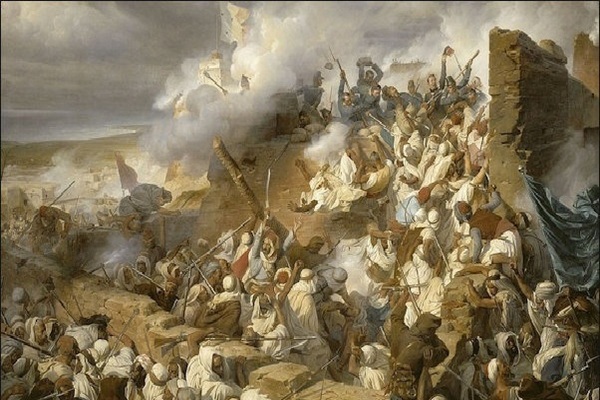
- Violent Conquest and Resistance
– Invasion and Occupation: France invaded Algeria in 1830 under the pretext of the “Fan Affair,” a diplomatic dispute involving the Dey of Algiers striking the French consul with a fly-whisk. The invasion led to the rapid capture of Algiers and the expulsion of Ottoman rulers. French forces employed brutal tactics, including mass killings, plundering, and environmental destruction, causing the native population to decline by nearly one-third by the 1870s .
– Resistance Movements: Key figures like Emir Abdelkader led prolonged resistance in the west until his surrender in 1847. The 1871 Mokrani Revolt in Kabylia, sparked by land confiscation and famine, was brutally suppressed, resulting in further land seizures for European settlers .
- Settler Colonialism and Land Confiscation
– Pieds-Noirs: Over 1 million European settlers (colons or pieds-noirs) dominated Algeria’s fertile coastal lands. By 1848, Algeria was declared part of France, and settlers gained disproportionate political power, sending delegates to the French Parliament while Muslims were marginalized .
– Land Dispossession: Laws like the 1863 sénatus-consulte dismantled tribal land ownership, enabling settlers to seize over 2.7 million hectares by 1900. Indigenous Algerians were forced into arid regions, worsening poverty and environmental degradation .
- Systemic Discrimination and Cultural Erasure
– Legal Inequality: The 1870 Crémieux Decree granted French citizenship to Algerian Jews but excluded Muslims, who were subjected to the Indigenous Code (Code de l’Indigénat). This code imposed harsh restrictions, including travel permits and forced labor, while limiting access to education and employment .
– Cultural Suppression: French authorities confiscated Islamic endowments (waqf) in 1843 and promoted assimilation. However, most Algerians retained their Arabic and Berber identities, resisting cultural erasure despite limited French-language schooling .
- Economic Exploitation
– Resource Extraction: Algeria’s agricultural wealth (wine, grain) and minerals (iron, coal, oil) were systematically looted. Settlers controlled 80% of arable land by the 1950s, while Algerians received minimal wages and faced chronic unemployment .
– Forced Labor: Algerian peasants were coerced into working on European-owned farms, often receiving only one-fifth of production under the 1871 Indigenous People Law .
- Path to Independence and Legacy
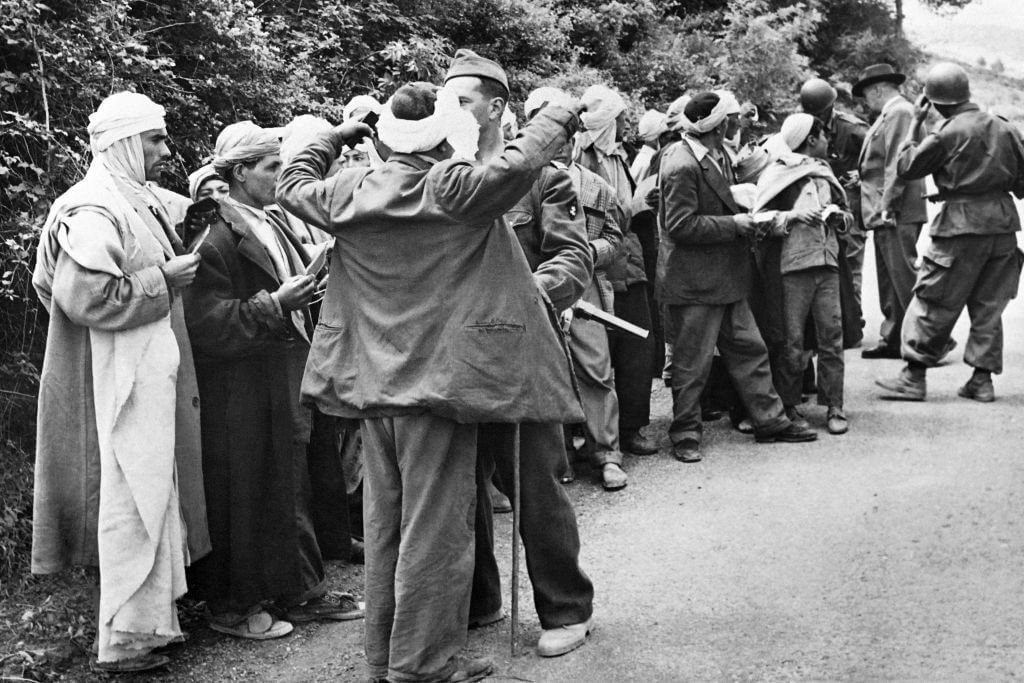
– Algerian War of Independence (1954–1962): The National Liberation Front (FLN) fought a brutal guerrilla war against France, marked by torture, massacres, and urban terrorism. Over 1.5 million Algerians died, and French tactics included forced relocations and nuclear tests in the Sahara .
– Post-Colonial Tensions: Despite independence in 1962, France has never formally apologized for colonial crimes. Recent steps, like repatriating remains of resistance fighters in 2020, remain symbolic. Algerians continue to demand acknowledgment, reparations, and the return of looted artifacts (e.g., 110 tons of gold and $180 billion in resources) .
Long-Term Impacts
– Demographic Displacement: Over 1 million pieds-noirs fled to France in 1962, while Algerians faced exclusion in both nations. This fueled migration and identity crises, evident in France’s marginalized banlieues .
– Cultural Trauma: Writers like Albert Camus grappled with Algeria’s dual identity, while post-independence violence (e.g., the 1990s civil war) reflects enduring colonial scars .
In summary, French colonization reshaped Algeria through violence, legal apartheid, and economic plunder, leaving legacies of inequality and unresolved historical grievances.