
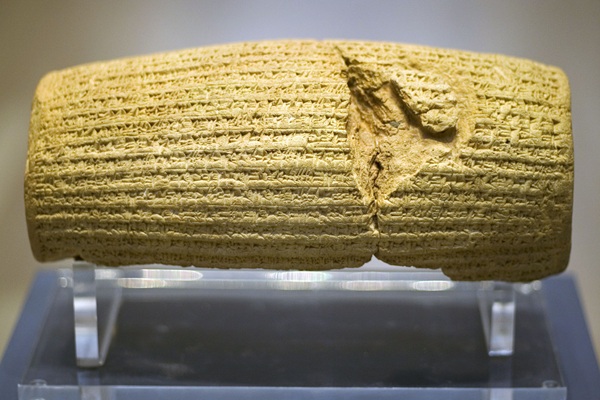
The accuracy of the Cyrus Cylinder isn’t a simple “yes” or “no” but depends on what aspect you’re examining.
To summarize: The Cyrus Cylinder is highly accurate and invaluable as a reflection of Persian imperial ideology and policy, but it is not a strictly factual, modern-style historical chronicle. It blends truth with propaganda, omission, and traditional Mesopotamian royal tropes.
Let’s break down its accuracy in different areas:
1. Where the Cyrus Cylinder is Largely Accurate and Historically Valuable
A. The Core Event: The Conquest of Babylon
The cylinder confirms the central historical event: that Cyrus the Great of Persia conquered Babylon in 539 BCE without a major battle. This is corroborated by other sources, like the Nabonidus Chronicle. The account of the Babylonian king Nabonidus losing favor with the priesthood of Marduk (the chief Babylonian god) also aligns with other historical records.
B. The Policy of Tolerance and Restoration
This is the Cylinder’s most famous and genuinely “accurate” aspect. It claims Cyrus:
Restored worship to gods whom Nabonidus had neglected.
Returned deported peoples and their divine statues to their homelands.
Allowed these peoples to rebuild their temples.
This policy is directly corroborated by independent evidence, most famously in the Hebrew Bible. The Book of Ezra describes Cyrus issuing an edict allowing the Jewish exiles to return to Jerusalem and rebuild their Temple (Ezra 1:1-4, 6:3-5). This biblical account is so aligned with the Cylinder’s policy that many scholars see them as different expressions of the same Persian imperial strategy.
C. The Physical Object Itself
As a genuine artifact from the reign of Cyrus (c. 536-530 BCE), it is an accurate primary source for understanding Achaemenid royal inscription styles, Akkadian cuneiform of the period, and the messaging Cyrus wanted to promote immediately after his conquest.
2. Where the Cyrus Cylinder is Inaccurate or Misleading (Propaganda and Omission)
- It is a Piece of Political Propaganda
The Cylinder was not meant to be an objective history. It was a foundation deposit, buried in the walls of Babylon to legitimize Cyrus’s rule to the Babylonian elite and the gods. To do this, it:
Vilifies the Previous King: It paints Nabonidus as an impious, incompetent tyrant who oppressed his own people. While Nabonidus was unpopular with the priests of Marduk, the Cylinder exaggerates his “evil” to make Cyrus look like a divine liberator.
Cast Cyrus as Marduk’s Chosen One: It uses classic Mesopotamian royal language, claiming the god Marduk sought a “righteous ruler” and chose Cyrus, a foreigner, to restore order. This was a standard trope to legitimize a new dynasty.
- It Omits Key Facts
The Role of the Persian Army: The Cylinder suggests Babylon simply opened its gates to Cyrus as a liberator (which may be partially true). However, it completely omits that a powerful Persian army was stationed just outside the city, making the “peaceful” surrender a forced choice.
The Fate of Nabonidus: The Cylinder is silent on the fate of the defeated king, Nabonidus, who was reportedly captured but spared by Cyrus. Omitting this mercy perhaps helped maintain the narrative of Nabonidus’s utter villainy.
Cyrus’s Own Deportations: While Cyrus is famous for ending the Babylonian exile, Persian records show that he and his successors also deported other populations for economic and administrative reasons. The Cylinder, of course, does not mention this.
- It Follows a Traditional Template
Scholars have found that the Cylinder closely follows the structure and phrasing of earlier Mesopotamian royal proclamations, particularly those of the Assyrian king Ashurbanipal. It wasn’t a revolutionary new text but a clever adaptation of a familiar genre to suit a new ruler’s needs.
Conclusion: A Balanced Verdict
Think of the Cyrus Cylinder not as a newspaper report, but as a political speech combined with a press release.
It is accurate in its reflection of Cyrus’s groundbreaking policy of “soft power.” The respect for local customs and religions was a real and revolutionary administrative strategy that stabilized the vast Persian Empire.
It is inaccurate in its one-sided portrayal of events and its omission of inconvenient facts. It is a masterpiece of spin, designed to legitimize a military conquest as a divinely-sanctioned liberation.
In short: The Cyrus Cylinder is an accurate testament to what Cyrus wanted people to believe he did, and the policies he genuinely implemented. It is less accurate as a blow-by-blow account of the historical events and their context. Its true historical value lies in understanding Persian imperial ideology, which, propaganda aside, was remarkably tolerant and effective for its time.