
The Dutch were heavily involved in colonialism from the 17th to the 20th century, establishing a vast overseas empire through trade, conquest, and exploitation. Here are the key aspects of Dutch colonialism:
1. Dutch East India Company (VOC) and Asia
– VOC (1602–1799): The Dutch East India Company was the world’s first multinational corporation and a major colonial force in Asia.
– Indonesia: The Dutch controlled the Dutch East Indies (modern-day Indonesia) for over 300 years, extracting spices, coffee, tea, and rubber through forced labor systems like the Cultuurstelsel (Cultivation System, 1830–1870).
– Malacca & Ceylon (Sri Lanka): The Dutch seized Portuguese colonies in the 17th century, but later lost some (like Ceylon) to the British.
– Taiwan (1624–1662): The VOC briefly colonized southern Taiwan before being expelled by Ming loyalist Koxinga.
2. Dutch West India Company (WIC) and the Americas
– WIC (1621–1791): Focused on the Atlantic slave trade and American colonies.
– New Netherland (1614–1667): Included present-day New York (New Amsterdam), New Jersey, and Delaware before being taken by the English.
– Suriname (1667–1975): A plantation colony relying on enslaved Africans for sugar production. The Dutch abolished slavery in 1863, but kept indentured laborers from India and Java.
– Dutch Caribbean: Colonies included Curaçao, Aruba, Bonaire (ABC islands), Sint Maarten, Saba, and Sint Eustatius, which remain Dutch territories today.
3. Africa
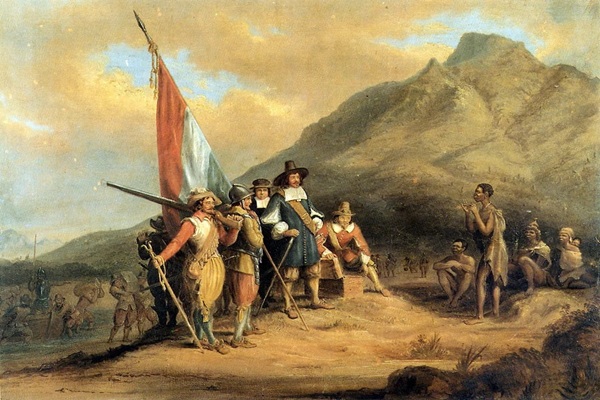
– South Africa (1652–1806)**: The Dutch Cape Colony was established as a supply station for VOC ships. Dutch settlers (Boers/Afrikaners) later clashed with the British and indigenous peoples.
– Gold Coast (Ghana): The Dutch took over Portuguese forts and participated in the transatlantic slave trade before selling them to Britain in 1872.
4. Economic Exploitation & Slavery
– The Dutch were major players in the transatlantic slave trade, transporting over 500,000 enslaved Africans.
– The Cultuurstelsel in Indonesia forced peasants to grow cash crops, leading to famines (e.g., the Java famine of 1849–1850).
5. Decolonization & Legacy
– Indonesia (1945–1949): After WWII, Indonesia declared independence, leading to a brutal war (1945–1949) before Dutch recognition in 1949.
– Suriname (1975): Gained independence but faced political instability and mass migration to the Netherlands.
– Caribbean Territories: Some islands (Aruba, Curaçao, Sint Maarten) are autonomous within the Kingdom of the Netherlands, while others (Bonaire, Saba, Sint Eustatius) are special municipalities.
6. Modern Reckoning
– The Netherlands has faced calls to acknowledge its colonial atrocities, including slavery and violence in Indonesia (e.g., the Rawagede massacre, 1947).
– In 2023, King Willem-Alexander apologized for Dutch slavery and pledged reparations research.