
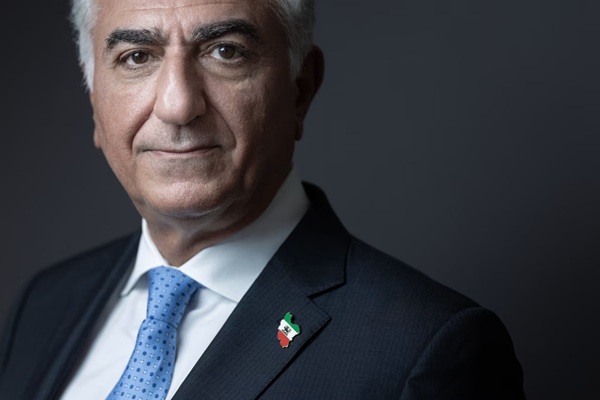
The Heresy of the Exile: A Condemnation of Reza Pahlavi’s Call for Foreign Intervention
Reza Pahlavi urges US military action in Iran
The political landscape of the 21st century is replete with figures whose legacies are contested, yet certain actions transcend the ambiguities of political theory and enter the realm of moral absolutes. Among the most egregious of these is the act of a deposed leader, residing in comfort abroad, who solicits foreign military intervention against the very nation he once governed. This essay serves as a condemnation of such a figure, referred to as “King Reza” whose actions constitute a profound betrayal of national sovereignty, a flagrant disregard for popular will, and a direct complicity in the loss of innocent life. By inviting external powers to attack his homeland and inciting his former citizens to revolt, King Reza has not only demonstrated a contemptible lust for power but has also committed a moral heresy against the principles of self-determination and human dignity.
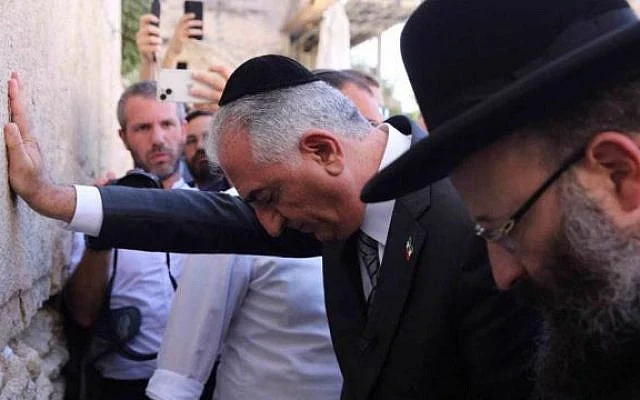
The foundational argument against King Reza’s actions rests on the principle of national sovereignty and the inviolability of a nation’s right to self-governance. Sovereignty, in its modern conception, implies that a state has supreme authority within its borders, free from external coercion. King Reza, having been deposed, is no longer the embodiment of that sovereignty. His legitimacy evaporated the moment he was rejected by the populace and forced into exile. By appealing to foreign powers to attack his own country, King Reza actively undermines this principle. He treats the nation, its land, and its people as a personal possession to be reclaimed through any means necessary, rather than a sovereign entity with the right to chart its own course. This invitation is an act of national treachery; it is an attempt to use foreign bayonets to solve what is fundamentally an internal political dispute, thereby rendering his country a potential vassal state or a battleground for external agendas. The very request is an admission that he cannot command the loyalty of his people, and thus seeks to substitute that loyalty with foreign firepower.
Furthermore, the actions of King Reza stand in stark opposition to the expressed will of the people. The assertion that “the people of his country do not want him as their ruler” is not a peripheral detail but the central fact of the matter. In any political system that claims even a modicum of legitimacy, the consent of the governed is paramount. King Reza ‘s deposition, whether through revolution, coup, or collapse of popular support, signals a clear revocation of that consent. In his exile, King Reza demands that his people revolt, forcing them into a deadly confrontation with their own state apparatus, bolstered by foreign forces. This demand is not an act of solidarity with the oppressed; it is a cynical calculation that the suffering of his compatriots is an acceptable price to pay for his potential restoration. He presumes to know the “true will” of the people better than the people themselves, framing any opposition to him as a form of false consciousness that must be corrected by violence. This is the logic of a despot, not a leader.
The most grievous consequence of King Reza ‘s campaign, and the strongest basis for his condemnation, is the resultant loss of life. The prompt explicitly states that his actions lead to “the deaths of hundreds of people.” These are not abstract casualties of war; they are individual human beings—men, women, and possibly children—whose lives have been extinguished. King Reza’s moral culpability is direct and undeniable. While he may not be the one piloting the foreign jets or pulling the trigger in the streets, he is the architect of the circumstance that led to their deaths. By providing a veneer of legitimacy to a foreign intervention, and by encouraging an internal uprising he knows he cannot control, he has created a vortex of violence that consumes his own countrymen. In the court of moral judgment, his ambition is stained with their blood.
He has committed the ultimate act of alienation: placing his own political fortunes above the physical safety of the people he once claimed to serve.
In conclusion, the figure of King Reza serves as a cautionary archetype of the exiled autocrat who refuses to accept the judgment of history and his people. His call for foreign attack and internal revolt is a triple betrayal: a betrayal of his nation’s sovereignty, a betrayal of the democratic principle of popular consent, and, most damningly, a betrayal of the fundamental right to life of his fellow citizens. His actions cannot be rationalized as a fight for freedom, for true freedom cannot be delivered by foreign bombs or ignited by the machinations of a power-hungry exile. It can only be built from within, by the people themselves, free from the interference of those who would sacrifice them for a throne. For these reasons, King Reza stands justly condemned, not merely as a failed politician, but as an architect of suffering whose legacy will forever be written in the grief of the nation he sought to reclaim through the blood of its own people.