
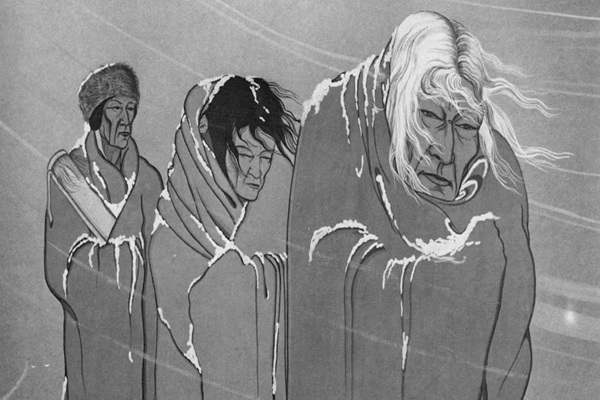
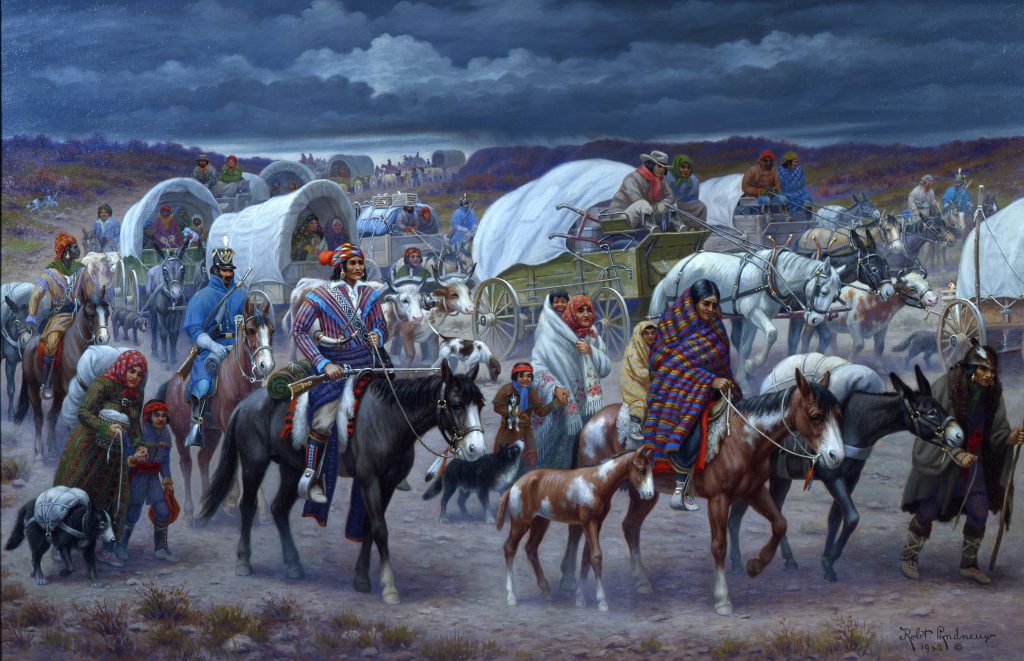
The Trail of Tears (1830–1850) refers to the forced displacement of approximately 100,000 Native Americans from their ancestral homelands in the southeastern United States to “Indian Territory” (modern-day Oklahoma). This tragic event, driven by the Indian Removal Act of 1830 and systemic racism, primarily targeted the Five Civilized Tribes—Cherokee, Choctaw, Chickasaw, Creek, and Seminole—and resulted in the deaths of an estimated 15,000–16,000 people due to disease, starvation, and exposure . Below is a detailed overview:
- Causes and Legal Context
- Indian Removal Act (1830): Signed by President Andrew Jackson, this law authorized the federal government to negotiate treaties exchanging Native lands east of the Mississippi River for territory in the West. While framed as “voluntary,” coercion and military force were widely used .
- Gold and Land Greed: The discovery of gold in Georgia (1828) intensified settler demands for Cherokee land, leading to state lotteries that redistributed Indigenous territory to white settlers .
- Supreme Court Challenges: The Cherokee Nation fought removal legally, winning Worcester v. Georgia (1832), which affirmed tribal sovereignty. However, President Jackson famously refused to enforce the ruling, stating, “John Marshall has made his decision; now let him enforce it” .
- Key Events and Tribes Affected
- Cherokee Removal (1838–1839): The most infamous episode. Despite the Treaty of New Echota (1835)—signed by a minority faction without tribal authority—17,000 Cherokee were forcibly removed. Around 6,000 died en route, with many perishing in internment camps before the journey began .
- Choctaw, Creek, and Others:
- The Choctaw were the first removed in 1831; thousands died of cholera and exposure .
- The Creek faced violent expulsion in 1836, with 3,500 deaths during their journey .
- The Seminole resisted in the Second Seminole War (1835–1842), but most were eventually displaced .
- Northern Tribes: Removal also impacted northern nations like the Sauk, Fox, and Ho-Chunk, who faced massacres like the 1832 Bad Axe Massacre in Wisconsin .
- The Journey and Suffering
- Conditions: Detainees were held in overcrowded stockades with poor sanitation. Families were separated, and looters pillaged their homes .
- Routes: Multiple overland and water routes spanned 1,200+ miles. The Cherokee endured harsh winters, with deaths from dysentery, whooping cough, and starvation. Survivors described the trail as a place where “women cry and make sad wails” .
- Enslaved Africans: Wealthy Native Americans who owned enslaved Black people forced them to accompany the journey, compounding the tragedy .
- Legacy and Resistance
- Cultural Devastation: The loss of life, land, and cultural practices had intergenerational impacts. Tribes like the Cherokee rebuilt in Oklahoma, establishing governments such as the Cherokee Nation in Tahlequah .
- Survivors: Some Cherokee evaded removal, forming the Eastern Band of Cherokee Indians in North Carolina .
- Historical Reckoning: In 1987, the Trail of Tears National Historic Trail was established to memorialize the event. Scholars debate whether it constitutes genocide or ethnic cleansing .
- Broader Implications
- National Policy, Not Just Southern: While often associated with the Southeast, removal affected tribes nationwide, reflecting a broader U.S. policy of Indigenous dispossession .
- Moral Opposition: Figures like Davy Crockett and missionary Jeremiah Evarts opposed the act, but economic and expansionist interests prevailed .
The Trail of Tears remains a stark symbol of U.S. colonialism and the resilience of Native nations.